Designing Orbits

An interactive astrodynamics learning platform that transformed complex orbital physics into an intuitive, real-time simulation experience, improving student comprehension and enabling universities to adopt a modern, subscription-based curriculum.
Problem
Core issues and why it matters
Business Problem:
Slingshot aimed to launch an interactive educational platform for teaching astrodynamics, offering universities a unique, hands-on learning tool while establishing a scalable subscription-based model to generate recurring revenue.
User Problem:
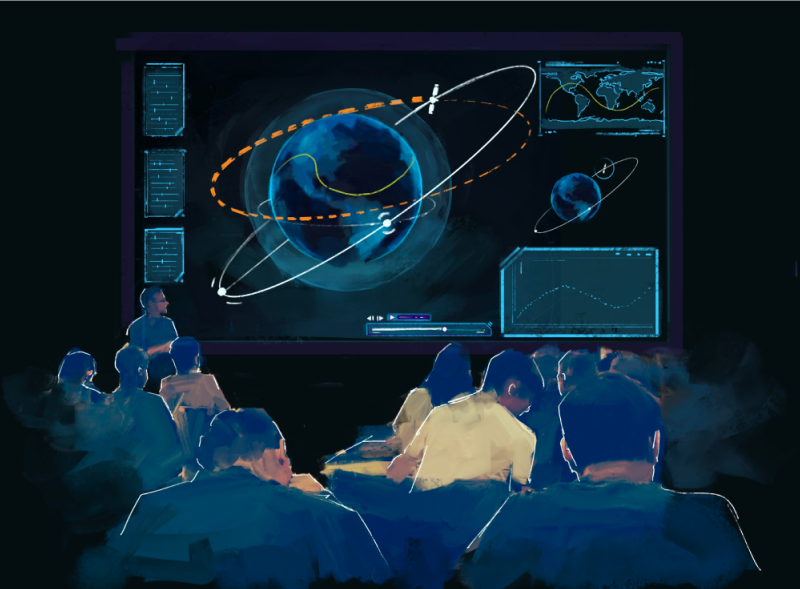
Students found existing tools overly complex and lacking real-time feedback. Instructors lacked effective ways to visually demonstrate orbital concepts in a collaborative classroom setting.
Technical Problem:
Existing simulations were either too simplistic or too rigid to scale across various educational contexts. Building a real-time orbital simulation required aligning UI clarity with accurate physics modeling, while keeping computational load manageable.
Why this matters:
Solving these three layers required translating complex physics into a simple, engaging, and reliable interface that aligned business goals with educational outcomes.
Challenge
Constraints and complexity shaping the solution
- Limited engineering resources: Team of four engineers for both front-end simulation and backend calculations.
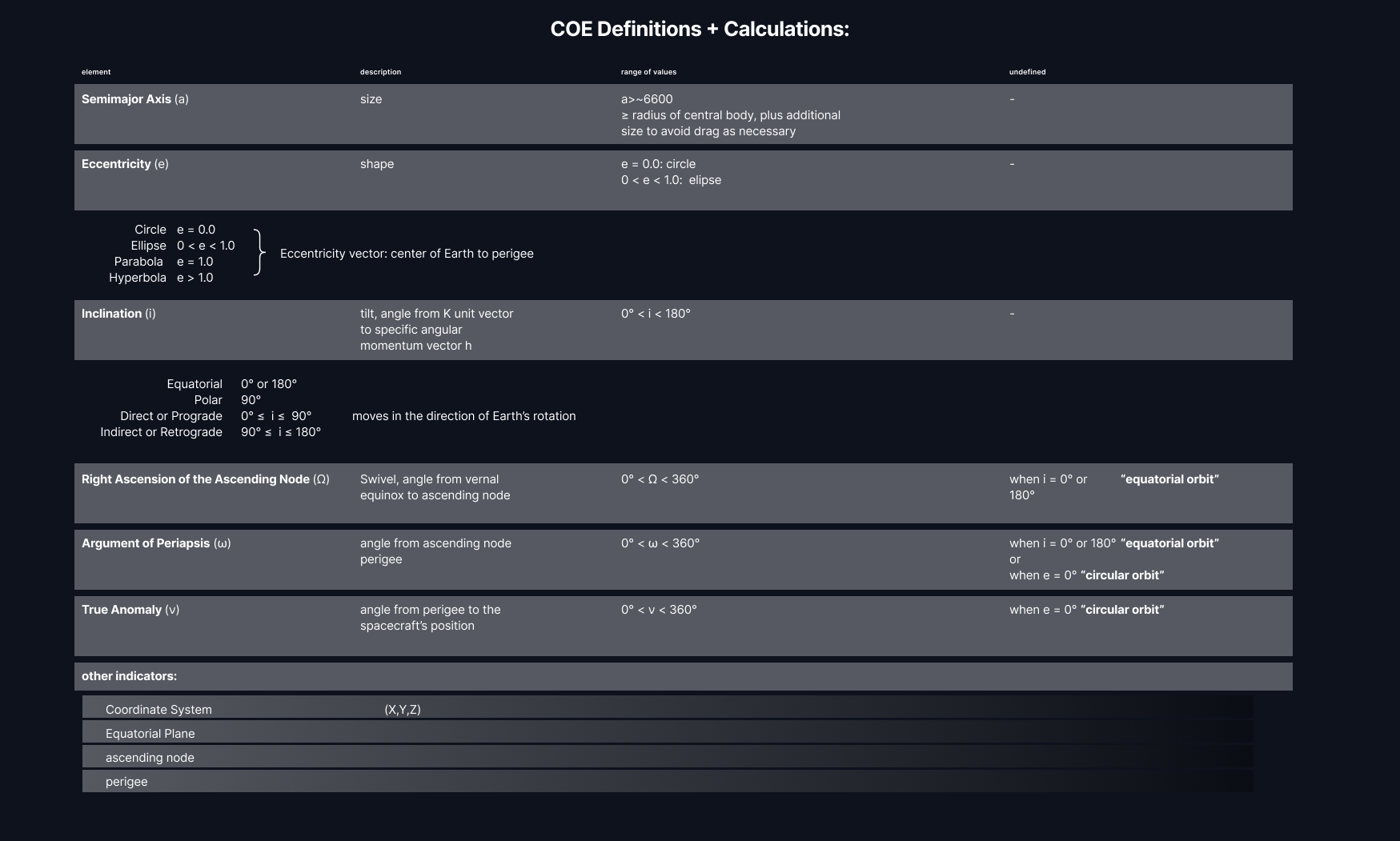
- Scientific accuracy: Worked closely with two astrodynamic SMEs to ensure orbital mechanics were precise.
- Tight timelines: MVP delivery targeted a 3-month cycle for programs.
- Technical complexity: Real-time simulation needed accurate calculations without compromising performance or usability.
Strategy
UX strategy and north-star direction
Experience Principles:
- Simplify complex orbital mechanics to promote understanding.
- Prioritize clarity and experimentation over flashy features.
- Make interactions tangible: users must see orbit behavior in real-time.
Hypotheses:
- Students retain orbital concepts better with interactive simulations vs. static lectures.
- Instructors will adopt the platform if it supports classroom collaboration and visualization.
Future-State Vision:
A lean, interactive learning laboratory where instructors can visually demonstrate orbital mechanics and students can experiment and track outcomes in real-time.
Why it mattered:
Aligning the product with both educational and business goals ensured adoption by professors and engagement from students, supporting Slingshot’s “teach them to retain them” strategy.
UX Work
Research, flows, testing, and iterative design work
- Conducted 2 intern and 3 professor interviews + 100 student surveys; identified gaps in existing learning tools.
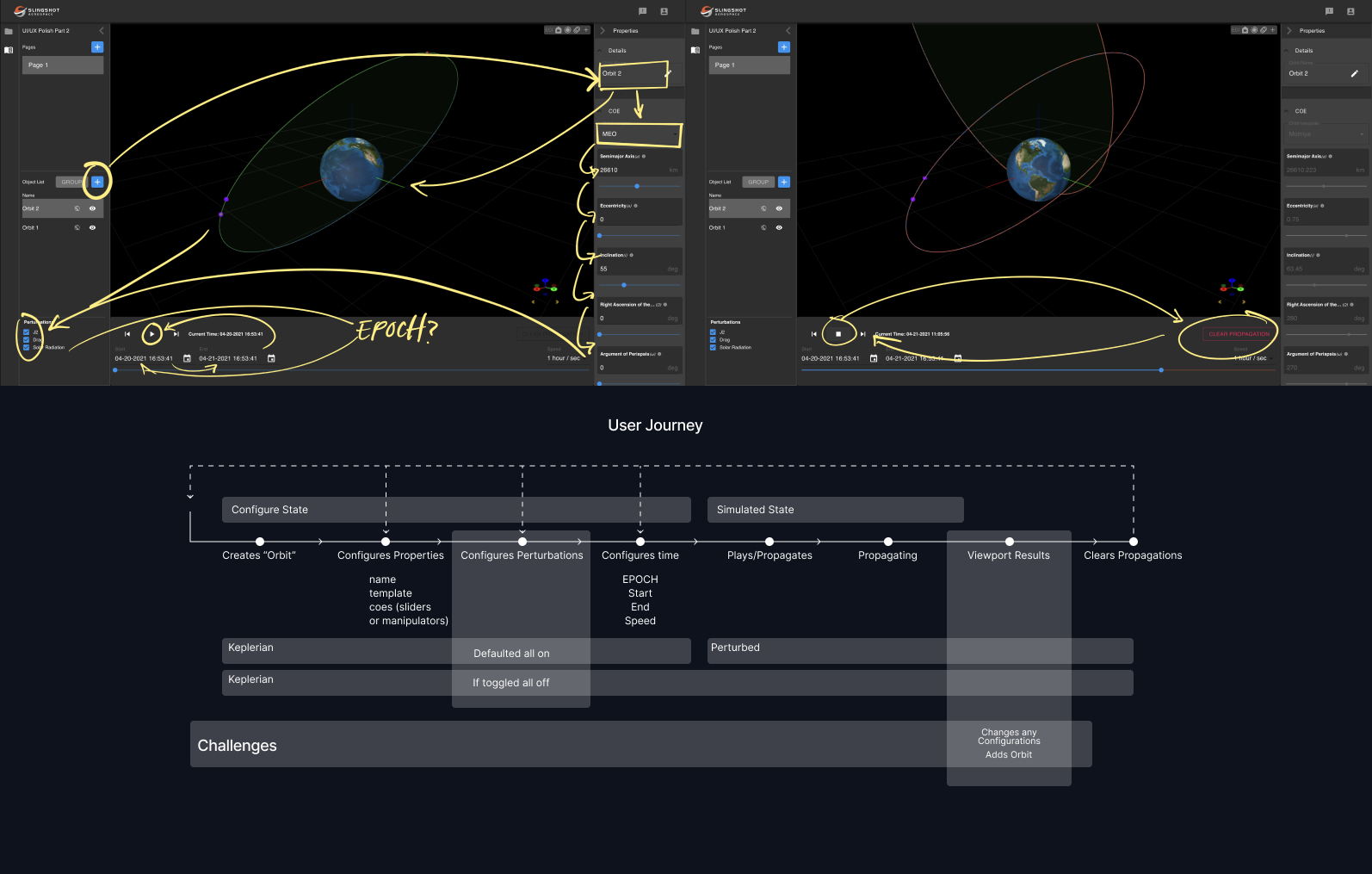
- Mapped learning workflows and interaction flows for simulations.
- Iterated low- to mid-fidelity wireframes directly in Figma with SME feedback.
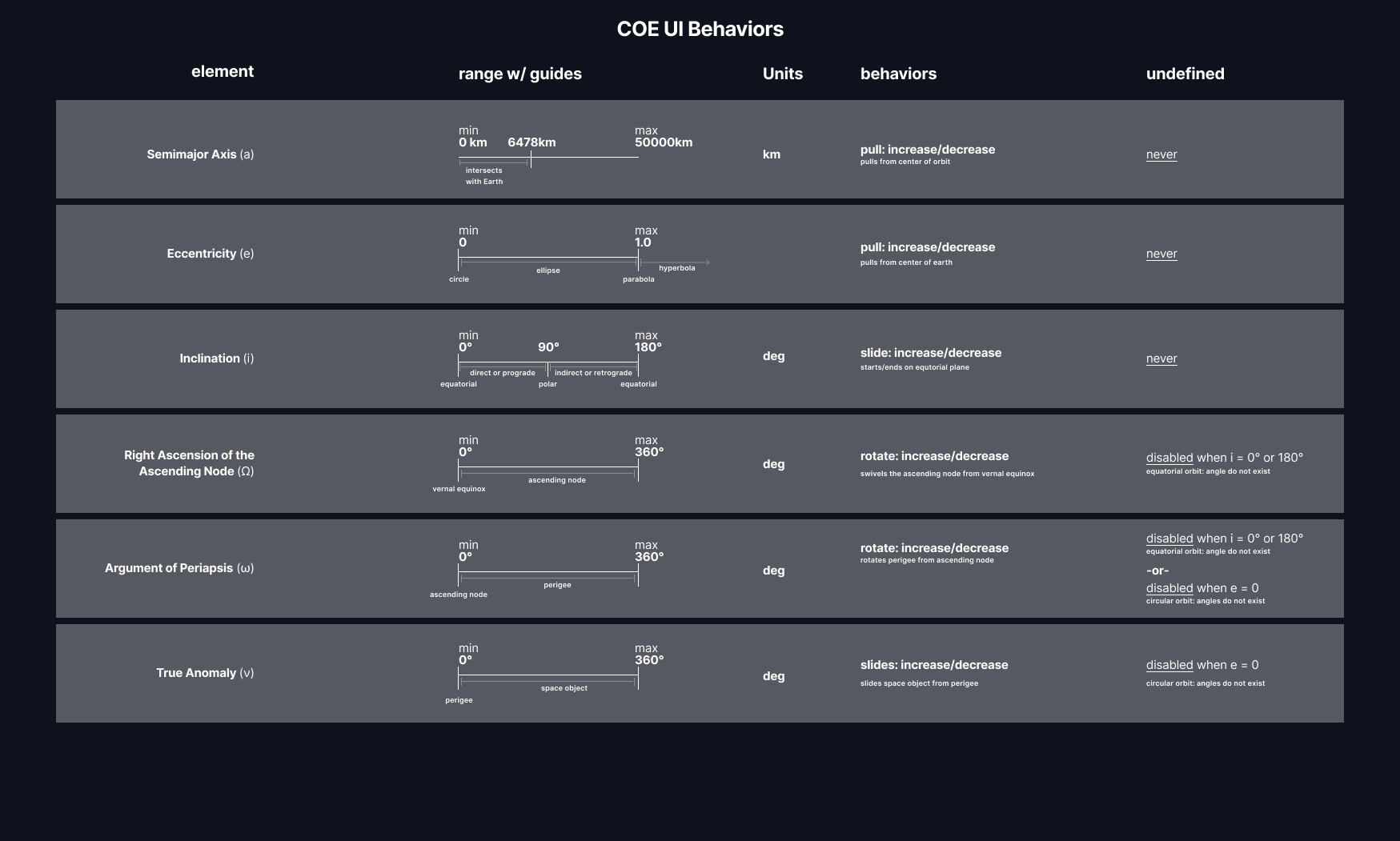
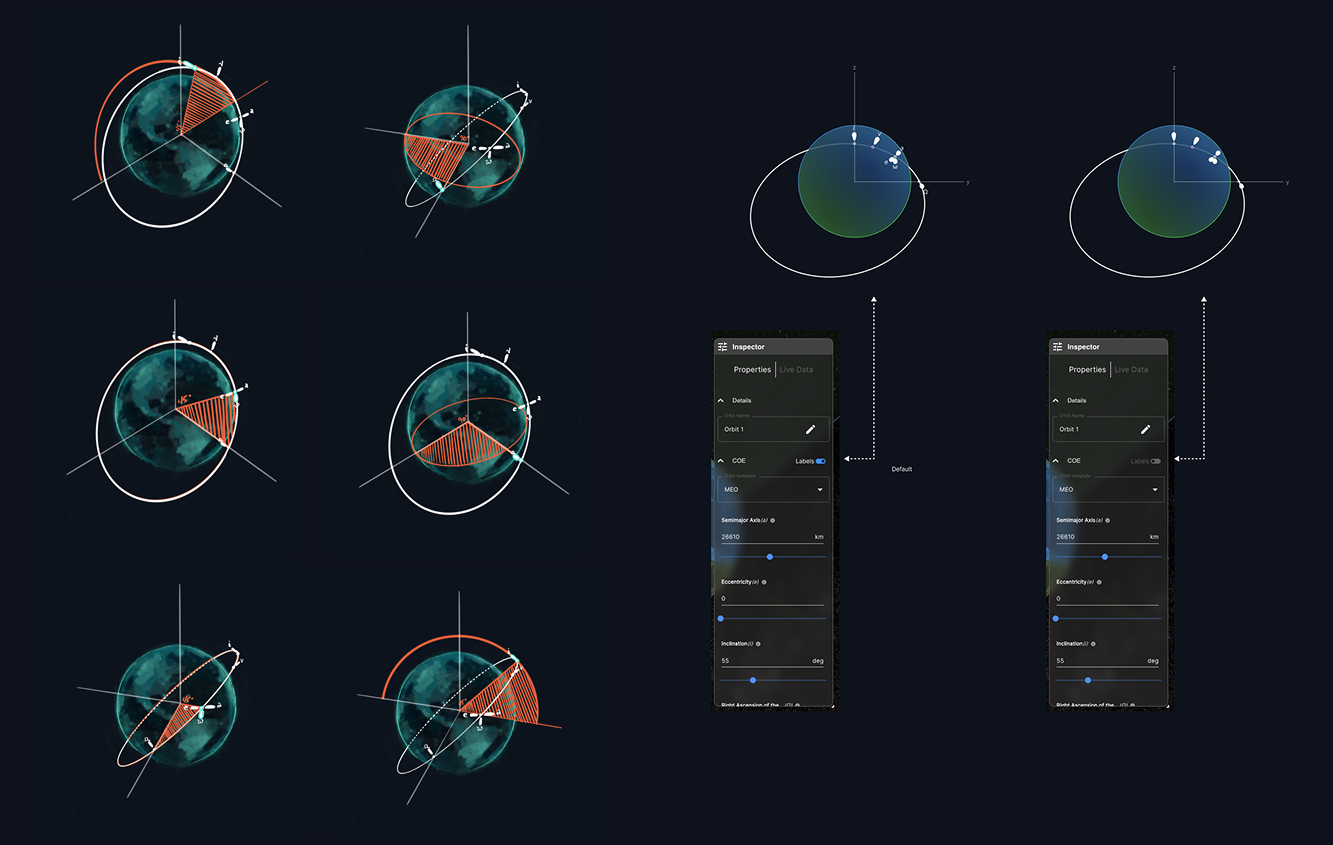
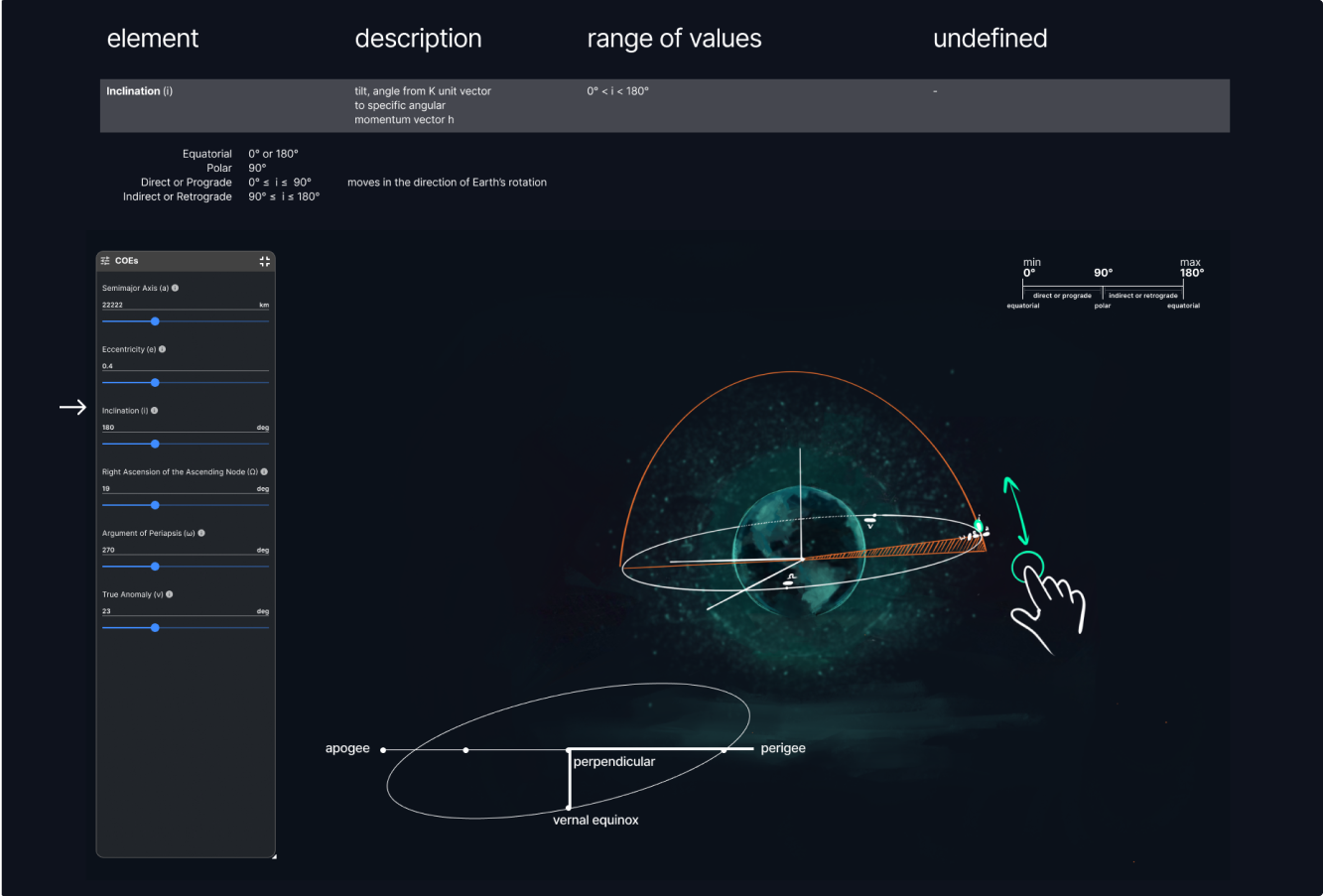
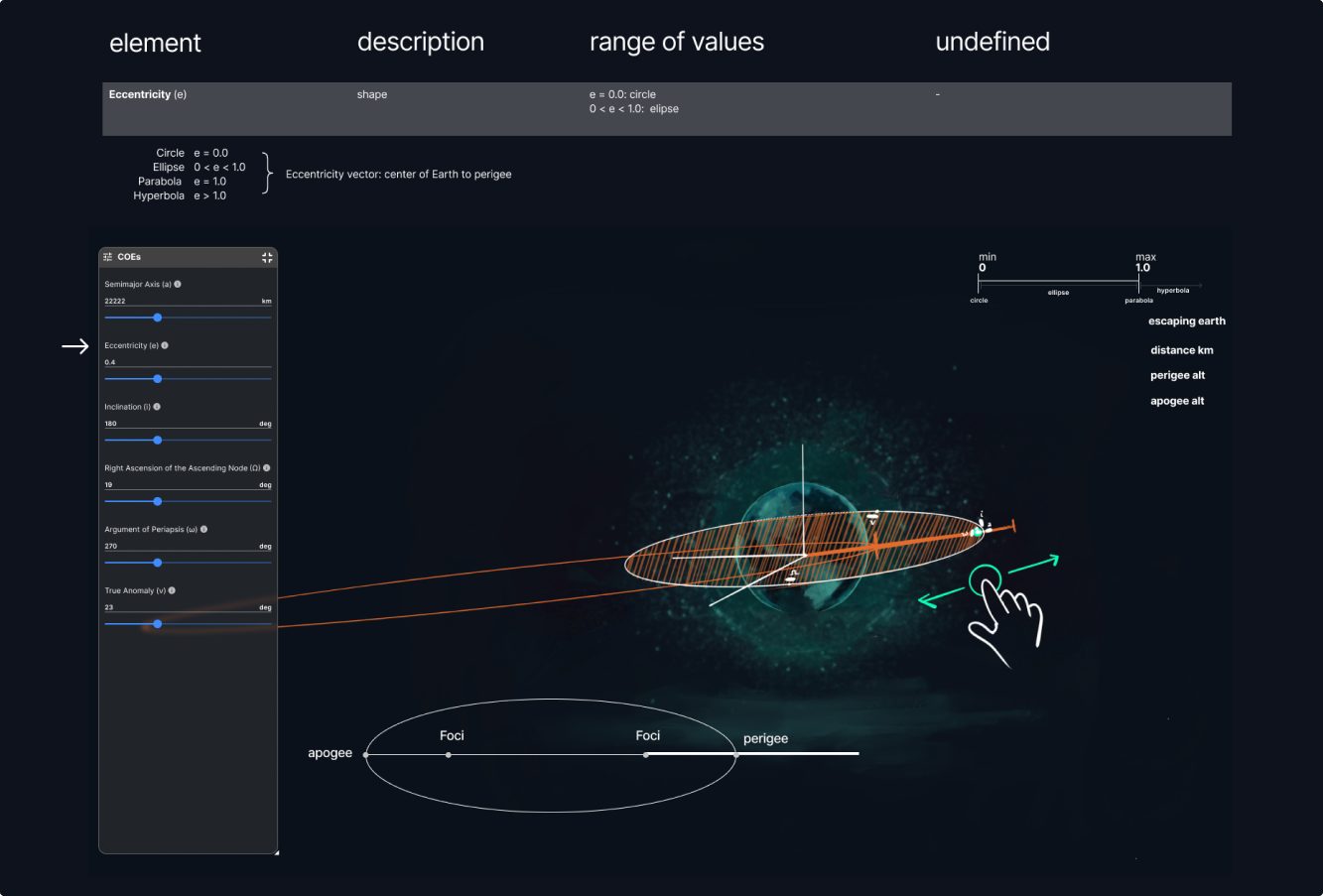
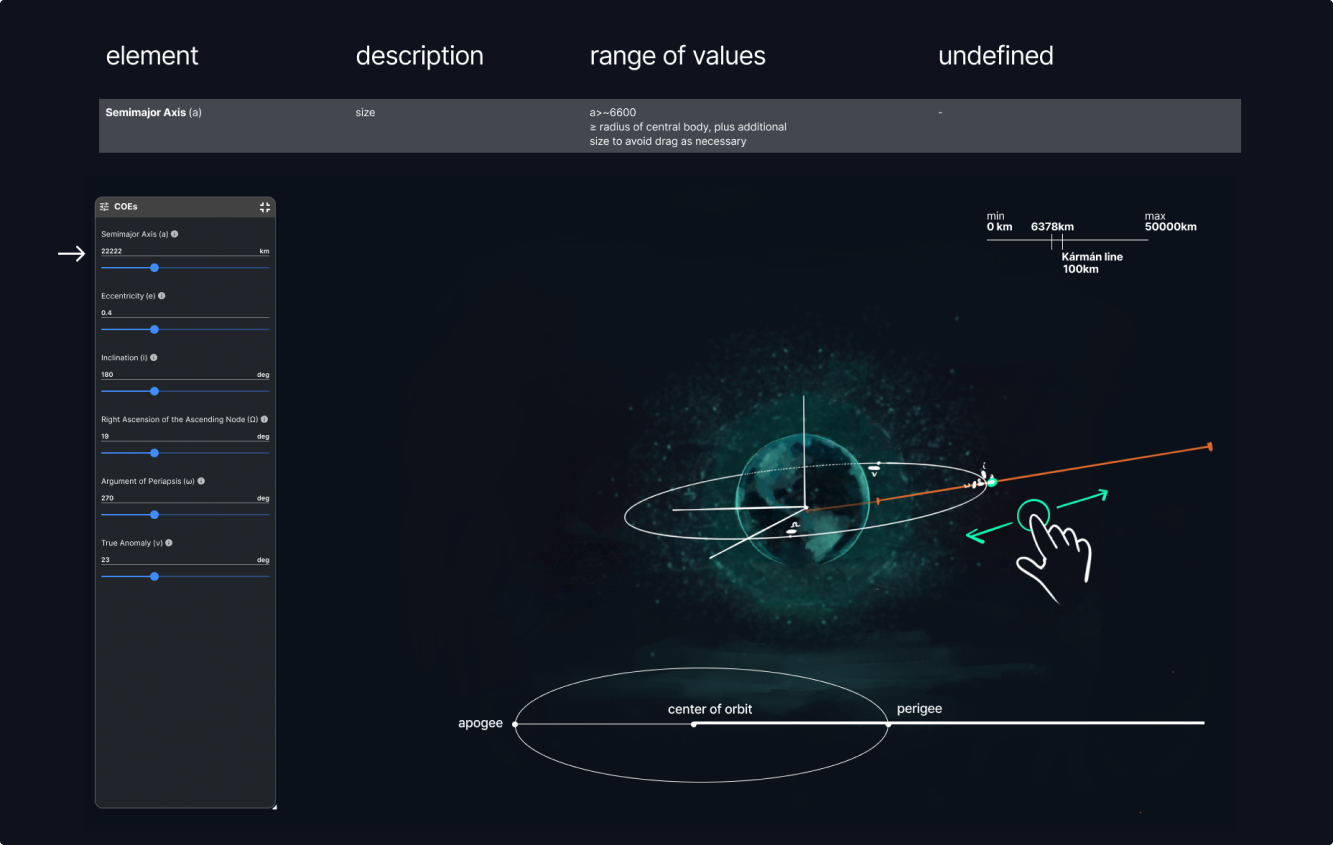
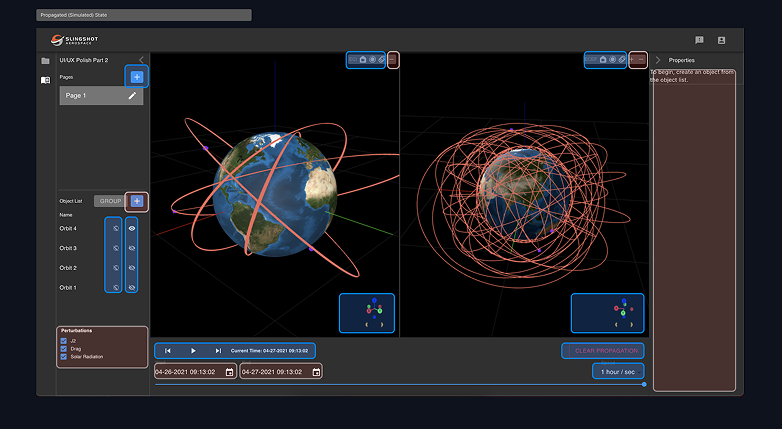
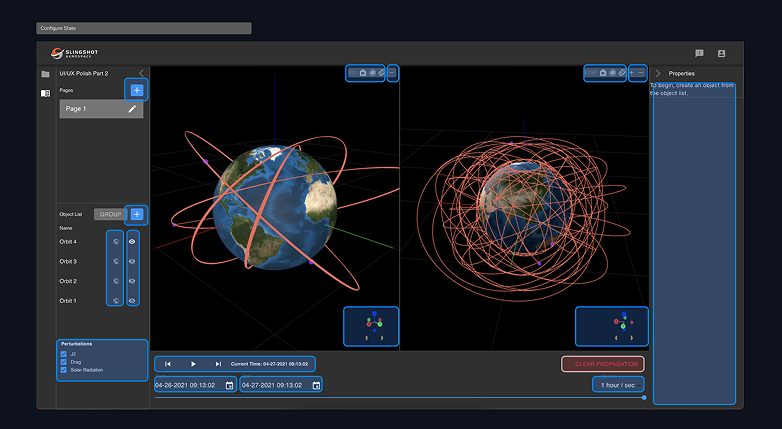
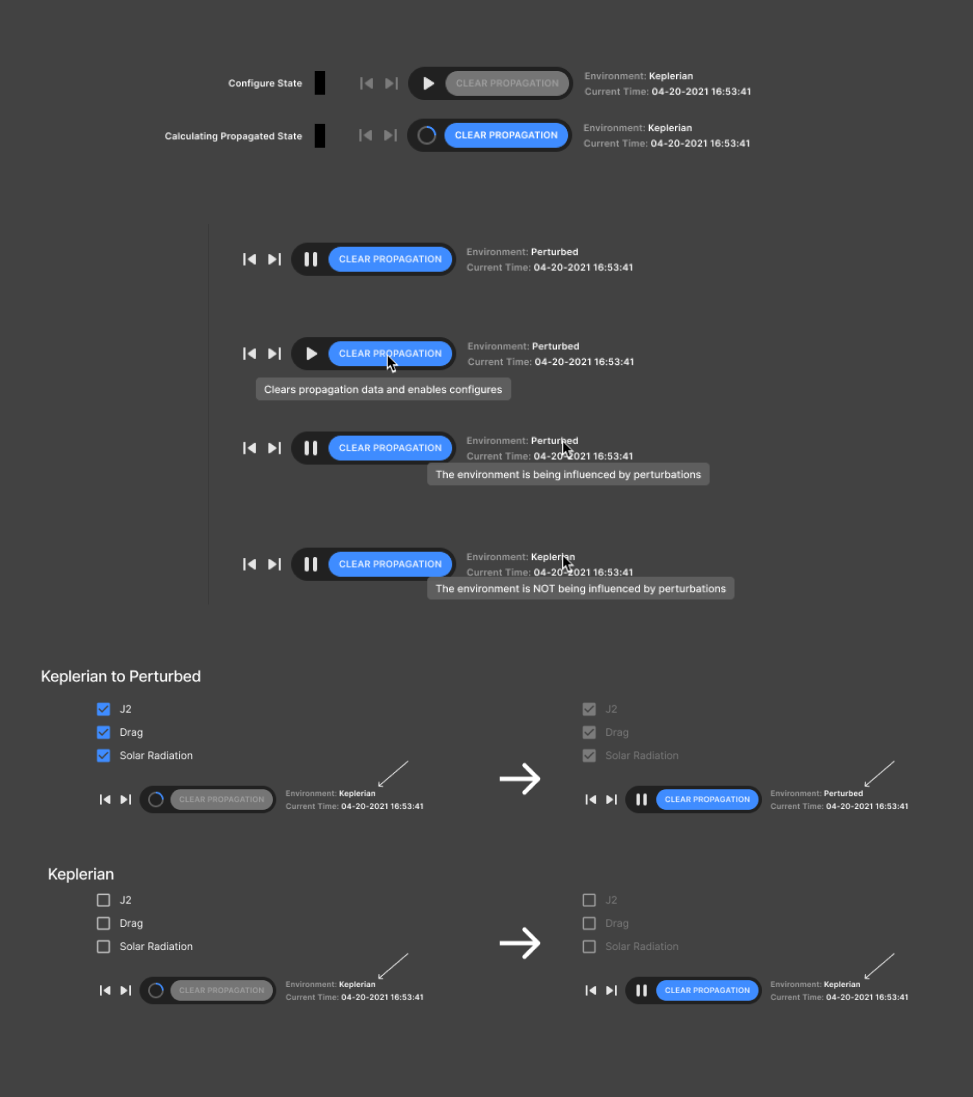
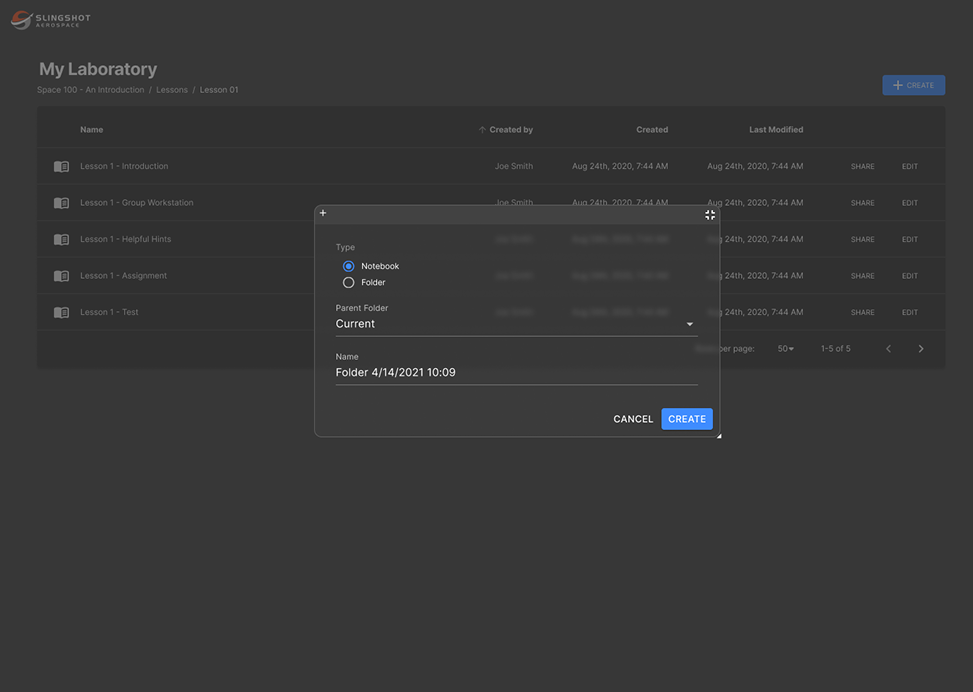
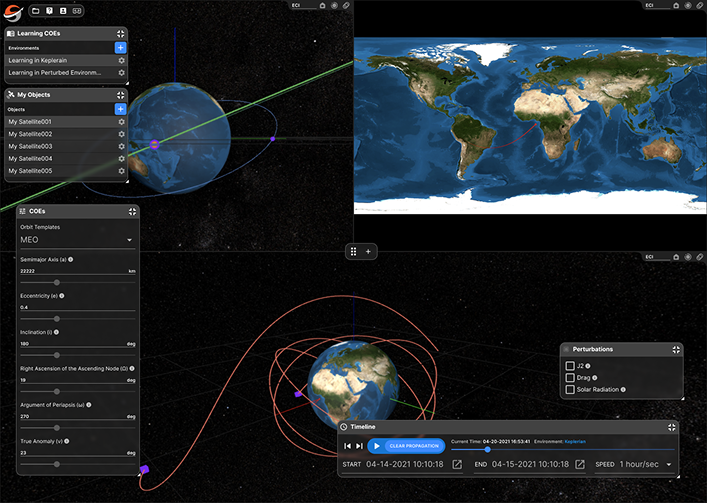
- Defined key interaction patterns: adjustable parameters, orbit visualization, contextual tooltips, simulation notebooks.
- Explored edge cases like multi-orbit interactions and collision scenarios, ensuring UI accommodated scientific accuracy without overwhelming users.
- Validated design through high-fidelity prototype sessions with instructors and SMEs; iterated on clarity, usability, and trustworthiness of orbital outputs.
UI Design
Systemized components and refined interaction states
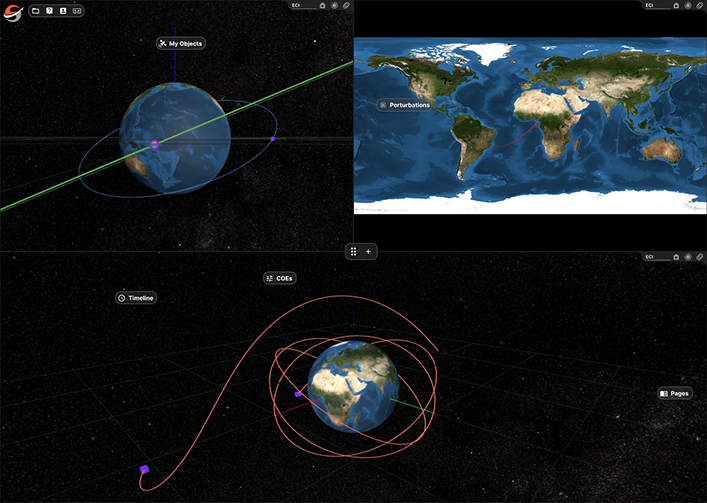
- Developed a consistent visual system: dark-space backgrounds, high-contrast orbit paths, and adjustable UI components.
- Created reusable components: sliders, players, adjustable containers, tooltips, simulation notebooks, and visual indicators of orbital parameters.
- Defined tokens for color, typography, and motion easing to maintain visual consistency across the platform.
- Documentation and Figma libraries enabled engineers to implement features without ambiguity, reducing development iteration.
Collab
Cross-functional executions
- PM: Defined MVP scope, prioritized core educational outcomes, and aligned features with business goals.
- Engineers: Partnered on feasible simulation architecture; iterated on performance vs. accuracy trade-offs.
- SMEs: Verified scientific accuracy at each design iteration.
- Cross-functional alignment: Continuous Slack/Confluence updates and design walkthroughs minimized rework during handoff.
Impact
Real outcomes in efficiency, adoption, and scalability
- Student engagement: >85% of enrolled students actively used the platform during the first semester.
- Learning outcomes: Professors reported a 60% improvement in comprehension of orbital mechanics.
- Adoption & retention: Feedback confirmed intuitive simulation controls and visual clarity.
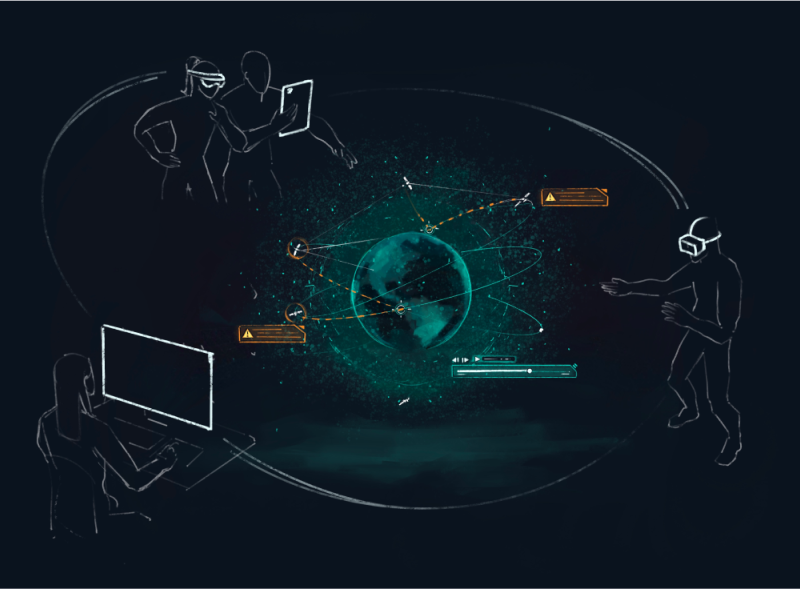
- Future roadmap: Design system and simulation framework now serve as the foundation for VR/AR expansion.
Key takeaway:
Empathetic, science-driven design can make complex concepts accessible. Cross-functional collaboration between SMEs, designers, and engineers unlocks both educational and business value.
Design Artifacts